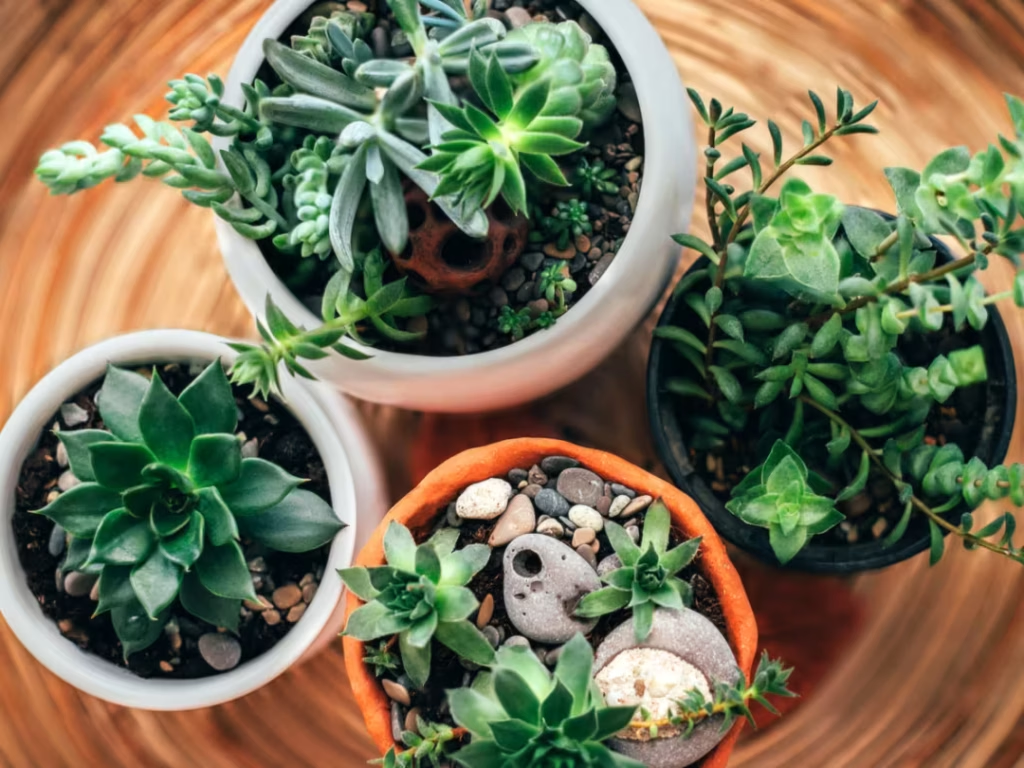
Pet owners could safely keep almost any type of houseplant if only dogs and cats didn’t explore the world with their mouths first. Unfortunately, some of the most well-liked and vibrant houseplants are known to be toxic to dogs and cats. Since inquisitive pets frequently like to taste new and unfamiliar plants, it is just not worth the risk for pet owners to keep these hazardous plants in their homes. Among many other things, some cacti and succulents are on that list of pet-unsafe houseplants. Fortunately, there are a few pet-friendly options available. Continue reading to learn what 10 is.
Knowing precisely which succulents are safe for cats and dogs is crucial when plant shopping because some pet-safe succulents have names or looks that are similar to those that are not. Because of this, you might not know what to look for and unintentionally purchase the incorrect plant if you’re not already an expert.
Thankfully, we spoke with experts in both plants and pets to determine which succulents are suitable for pet-friendly homes. The best part is that all of these varieties are fairly simple to locate at your neighborhood nursery. The top ten vet-approved species are listed below, though there are many to choose from! Your four-legged relative will appreciate your thoughtfulness, and they will think you’re a wonderful pet owner for keeping them safe.
A Caution Regarding Succulents That Are Suitable for Pets
The distinction between pet-safe and pet-food is similar to that between non-toxic and edible. In other words, just because a succulent is pet-friendly does not imply that your dog or cat should consume it.
“Veterinarian Dr. Kathryn Dench, chief scientific advisor for Paw Origins, cautions that even safe succulents can cause mild stomach upset if a pet eats a large amount.” “In actuality, the majority of problems I observe are gastrointestinal rather than actual poisoning and prevention is typically about wise plant placement rather than panic.”
Your pet may have enough gastrointestinal distress to induce nausea and vomiting if they really eat one of these succulents, but a small nibble won’t usually result in any severe symptoms. However, it is unlikely to develop into a medical emergency because these succulents on our list don’t contain many significant toxins there. There shouldn’t be any problems as long as you reduce your pet’s capacity to bite.
10 Well-liked Pet-Safe Succulents
Haworthia Zebra
Although aloe vera plants are among the most popular succulents to keep indoors, pet households should avoid them due to the cytotoxic saponins they contain. Fortunately, the radical-looking Zebra Haworthia is an option if you still want a spiky succulent on your windowsill.
“Haworthia is frequently suggested as a popular substitute for Aloe Vera,” says Adrian Aviles, proprietor of Athletic Club Flower Shop in Los Angeles. Additionally, the Zebra Haworthia has a striking visual feature that Aloe Vera does not: a charming set of bright-white zebra stripes. “It offers a similar architectural look, but is widely considered pet-friendly and lacks irritating sap.”
Dr. Dench also attests to the Haworthia’s compact slow-growing and non-toxic, making it ideal for small spaces Zebra Haworthia usually don’t grow much taller than half a foot, and they require very little maintenance they only require watering once every two to four weeks, depending on the season—and prefer bright indirect light or partial sun.
Gasteria
According to Dr. Dench, Gasteria succulents are closely related to Haworthia and Aloe, but without the toxicity risk associated with Aloe. They also have a variety of appearances, including variegated, wart-speckled, striped, and, in the case of the large Gasteria Acinacifolia, bright, tubular orange and pink flowers.
There are countless varieties of Gasteria succulents and all genuine Gasterias are succulents that are safe for dogs and cats. Avoid Gasteraloes, which are hybrid Gasteria Aloe plants, as they may contain some of the same saponins as regular Aloe plants.
Chicks and Hens (Sempervivum)
Another succulent that is safe for dogs and cats Adrian Aviles and Dr. Dench both praised the charmingly named Hen and Chicks succulent as a particularly resilient non-toxic variety. They are resilient enough to withstand the occasional knockover and flourish in direct sunlight which is especially helpful for cat parents.
The succulent gets its name from its cute growth method, in which the larger mother plant the hen uses underground runners to sprout several smaller baby plants the chicks. To propagate new plants, you can either transplant the chicks into a new plant or plant a hen and chicks in a large pot.
Echeveria
Consider purchasing this cat-safe succulent if you are a cat parent. Since Echeverias usually predominate in the succulent section of plant nurseries and the garden sections of home improvement stores, it’s likely that the plant that comes to mind when you hear the word succulent is an Echeveria is a particularly mild succulent even by pet-safe standards and grows in large colorful rosettes.
According to Dr. Dench, even if a leaf is nibbled it’s unlikely to cause harm. These succulents are fairly hardy much like Hen and Chicks and you can even grow them outdoors in sandy soil if you live in a warm climate they will be killed by a hard frost.
Sedum morganianum, or Burro’s Tail
The distinctively elegant Burro’s Tail succulent is the perfect choice if you want to add some hanging greenery to your collection of houseplants. The Burro’s Tail also known as Donkey’s Tail or Sedum morganianum has long trailing stems that hang down the sides of the pot like a burro’s tail.

This variety is a popular choice for hanging planters according to Adrian Aviles which further improves their pet-safety by keeping them out of the reach of curious pests thus this is a fantastic option if you have a pet.
Schlumbergera, or Christmas Cactus
Keeping cacti can be especially challenging if you have pets. Apart from the fact that some varieties of cacti are poisonous many cacti are infamously covered in prickly spines that can easily poke a passing pet that isn’t a problem with the Christmas Cactus though.
Christmas cacti are a lower-risk option for active households because they have soft segments instead of sharp spines unlike desert cacti the green scalloped leaves of True Christmas Cacti and their vivid pink flowers are completely safe for dogs and cats.
Prickly Pear Cacti Without Spines (Opuntia)
There are Opuntia cacti that have few or no spines so don’t let the name prickly pear deceive you. To lessen the risk of physical harm Dr Dench advises pet owners to choose these low to no spine varieties all Opuntias regardless of spinyness are non-toxic.
Epiphyllum anguliger, or fishbone cactus
The Fishbone Cactus also known as Epiphyllum anguliger is another member of the prickle-free cactus train this crazy plant also known as the Zig Zag Cactus is non-toxic to dogs and cats and has long trailing zigzag leaves that resemble pinking shears.
Senecio serpens, or blue chalksticks
Do you want the appearance of a coral reef on your windowsill if so cultivating Blue Chalksticks also known as Senecio Serpens may be enjoyable for you this succulent produces blue green fleshy finger-like leaves that protrude a few inches from the ground.
Dr. Dench states that Blue Chalksticks are often confused with toxic Senecio species but this specific variety is considered pet-safe when identified correctly don’t purchase anything that isn’t specifically Senecio Serpens.
Lithops, or living stones
Dr. Chyrle Bonk a veterinarian consultant with Embrace Pet Insurance suggested this unusual option to round out our list Lithops succulents also known as pebble plants or living stones are distinct from other succulents partly due to their unusual appearance.
Living stones which are native to southern Africa’s desert regions prefer full sun and little watering though some types may be susceptible to intense heat the cut plants split open to reveal a vivid yellow blossom in the fall and winter.
Benefits of Succulents Safe for Dogs and Cats
Succulents are great house plants for many reasons in addition to the large number of pet-safe varieties here is some additional information about them in case you are unsure about purchasing one.
- They require little upkeep.
- They’re tough.
- They’re Exceptionally Simple to Propogate
- They’re Vibrant
In terms of houseplants the majority of pet-safe succulents are native to arid or desert regions and have evolved to withstand intense heat full sun and protracted drought these non-toxic pet-friendly plants require very little maintenance though you can’t completely avoid watering them.
Succulents can withstand a great deal of punishment because they have adapted to harsh environments although they are not unbreakable they can typically recover from excessive or insufficient watering as long as you modify your watering practices.
Succulents that are safe for pets are nearly effortless to propagate simple propagation techniques allow you to create new non-toxic succulent plants from a single leaf it’s simple to propagate succulents from leaves.
Succulents are available in almost every hue of the rainbow including pet-safe varieties these non-toxic pet-friendly plants add striking color to any area with hues ranging from gentle greens and blues to vivid pinks purples and reds.